


Antelope Canyon Stargazing Experience
Stargazing at Antelope Canyon
At the designated time, we'll meet at Milepost 35.5 for a safety briefing and nighttime orientation. As the sun sets, we'll start making our way into Antelope Canyon.
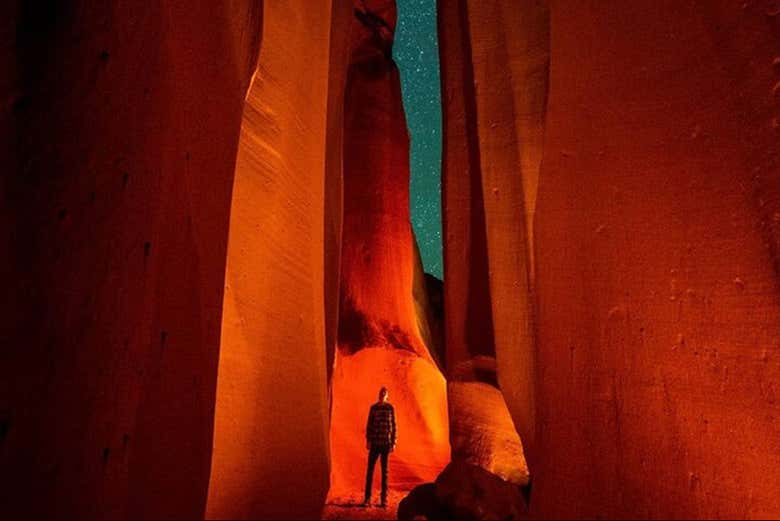
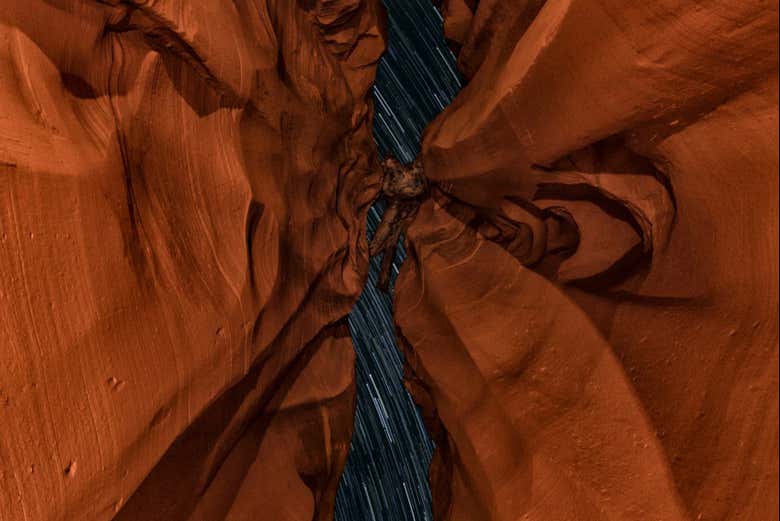
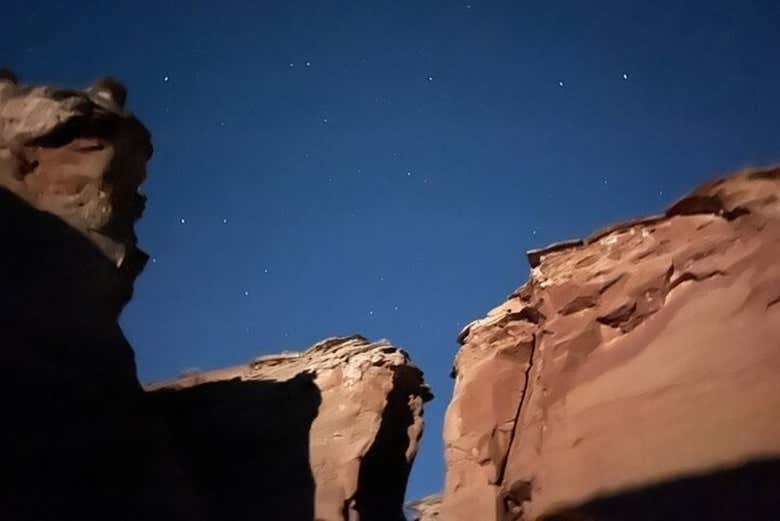
From the very first moment, we'll discover a winding crack carved into sandstone. With every step, the canyon draws us in with its striated walls of sedimentary layers and surfaces smoothed by erosion.
As we walk, we'll identify geological features typical of Antelope Canyon. We'll spot S-curves, which tend to form when water flow is channeled through very narrow passages, and talk about why these canyons, despite being in a desert environment, can actually be dangerous during sporadic rainfall. Did you know water can build up incredibly fast here?
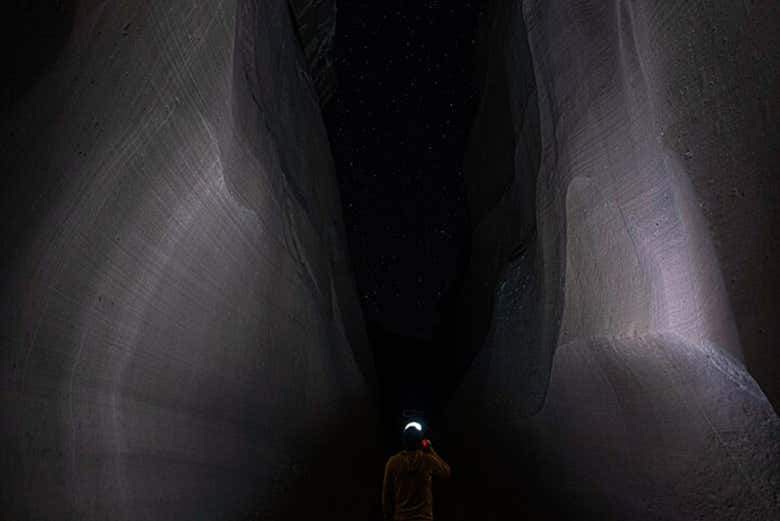
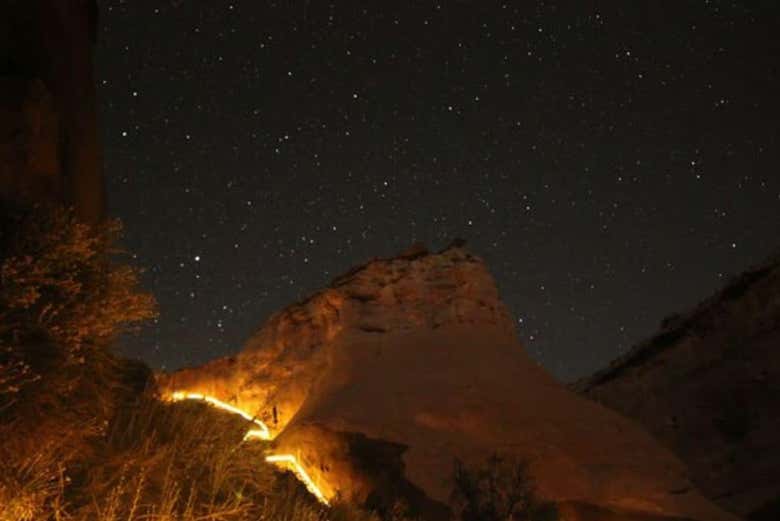
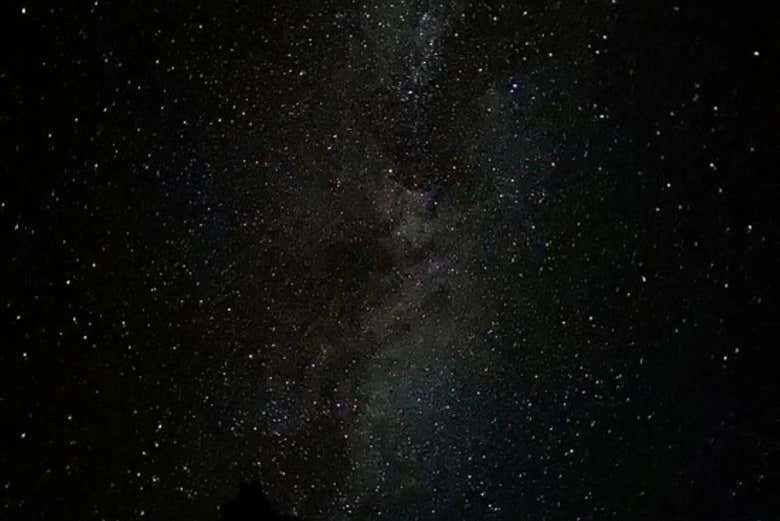
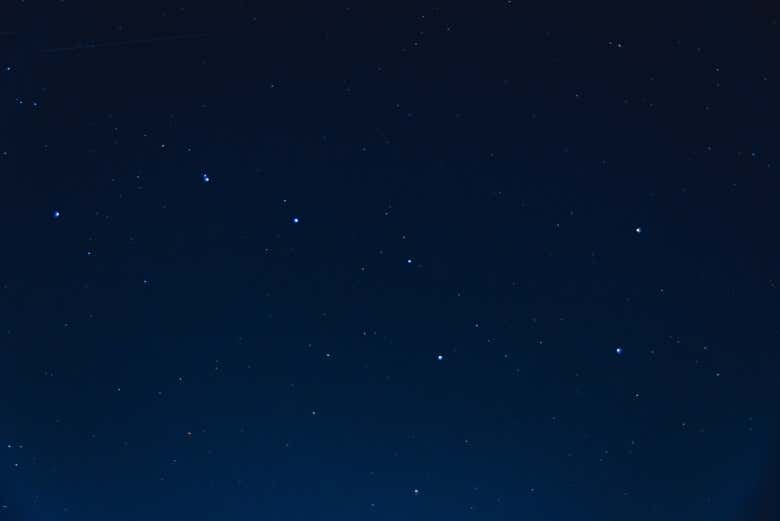
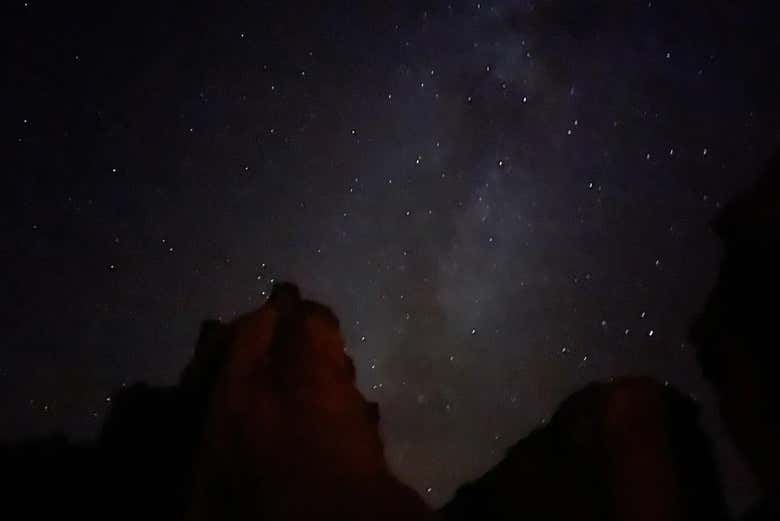
As the canyon cuts us off from artificial light and we descend via staircases, we'll stop at open, stable spots to observe the sky. With no light pollution to speak of, we'll be able to see the Milky Way. We'll find the best viewing area depending on the time of year and time of night, and learn to identify the constellations.
Satellites passing overhead are a common sight too, and with a bit of luck, we might even catch a shooting star. In exceptional conditions, we could spot a faint northern lights display, though in Arizona, that's rare and depends on intense geomagnetic storms.
Finally, we'll head back to the meeting point, where we'll say our goodbyes after a total of 2 hours on the route.
More Information
Duration
2 hours.
Language
 The activity takes place with a guide that speaks in English.
Included
English–speaking guide
Not included
Admission to Navajo National Park: US$ 8 per person
When to book?
You can book up to the tour start time subject to availability. Book now to guarantee your spot.
Type of voucher
Electronic. Show the voucher on your phone.
Accessibility
Not wheelchair accessible.
Sustainability conditions
All services published on Civitatis are carried out in accordance with our Sustainability Code.
Our providers commit to:
- Provide a safe and satisfying experience.
- Reduce, reuse, recycle.
- Incorporate eco-conscious technologies.
- Uphold fair employment standards.
- Foster the growth of local communities.
- Preserve the integrity of local culture.
- Safeguard both cultural and environmental heritage.
- Ensure ethical treatment of animals.
- Operate with honesty and transparency.
- Encourage sustainable behaviors among customers and staff.
This particular activity contributes as follows:
- No printing of documentation required.
Pets
Not permitted.
Frequently asked questions
-
Q - Anything else we should keep in mind before booking?
A - Please note that the start of the trail along the canyon wall is steep and has handrails, and we'll climb 2 flights of stairs. For this reason, the tour is not recommended for people with reduced mobility.
-
Q - What type of clothing should we wear to the activity?
A - Even in summer, temperatures in the Arizona desert drop considerably at night, so we recommend dressing in layers.
-
Q - What's the best time of year to go stargazing in Antelope Canyon?
A - The summer months (June through August) are ideal for viewing the Milky Way's core, though the weather is hotter. For clearer skies and cooler temperatures, fall is an excellent time to visit.
-
Q - Which local supplier will be providing the tour?
A - Antelope Valley Canyon Tours Corporate name: Ligai Si ANii Tours Registered Office: PO BOX 4991, Page, United States Tax Identification Number (VAT ID): 92-2492946 Contact information Email: melanie.spencer@hikingslotcanyons.com Phone: 9286402594
-
Q - Why do this activity with Civitatis?
A - Your safety is our priority. Civitatis works with certified providers for reliable and safe adventures. More information
-
Q - How to book?
A - To reserve the activity, choose the date and complete the form on this page. You will receive your confirmation immediately.
If you have any other questions please contact us.
Free cancellation
You may also be interested in
Milepost 35.5